Tuesday, October 30, 2018

Front yard gardening thoughts


Not so much by luck but by choice, both the homes we've owned allowed front yard gardens. However, our first home in the city was stricter about what was planted than our current home in a small town on the Colorado plains. Which is one of the reasons we chose to leave the city. Because even though our first house permitted some front plantings, they were very specific as to the ratio of plantings to grass. Here, there are no such restrictions. And you know me. I must be free to garden as I please!


For some reason, many municipalities or neighborhoods believe front yards should be covered with a neatly manicured lawn and little else in order to keep a tidy, uniform look. So much so, that front yard plantings are often strictly regulated. In some people's opinion, this adds to property values. Personally, I love homes with vegetable, herb and flower gardens in front. They're gorgeous and productive. I don't see what the big deal is.

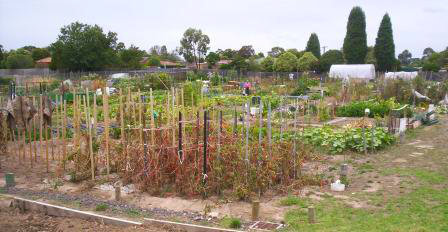
In my opinion, front yard gardens are beautiful for multiple reasons. They provide food, for one. In fact, some front yard gardeners share their food with the community. They're less costly to maintain. They're a wonderful way to bring back healthy ecosystems, destroyed by years of maintaining an unnatural grass lawn. They also reflect the personality of the homeowner. I don't know about you, but I'm not into “Stepford” towns. I love diversity and variety.

I'm really looking forward to doing some front yard gardening next year. The old homeowners did us a great favor by planting a lot of perennials flowers in the front beds directly in front of the house. I plan to supplement with a few more. I got a good start on it last year but since we moved late in the season, I didn't have a lot of time to properly trim, mulch and such. I hope to be able to add some finesse next spring.

I'd like to ad some beds around the outer border of the front yard for a cleaner, more defined look. I've also been reading up on minimizing the grass by planting clover instead. I've heard it requires less work, keeps weeds down and uses much less water, while still maintaining a grassy lawn look. My eventual goal is to have mostly garden with just enough clover lawn for paths through. But that's likely to take time.

I want my front yard garden to have a healthy combination of herbs, flowrs, veggies, shrubs and trees. I'd also like a few wild native plants in the mix. Ideally, I'm looking to recreate the natural local ecosystem but add a few non-conflicting food plants to the mix. As always, my garden will be organically planted and maintained. No GMO's allowed. And of course, in consideration, it will be a bit neater than the back garden.

And speaking of the back garden, I had some containers back there this year. But next year, my focus is going to shift to the front. I want to spend my summer largely on “perfecting” the front yard. Even though I don't believe a perfect green lawn is healthy, I still believe in curb appeal. The front yard is all most people see of your home. So why not make it beautiful?

The plans I have for my front garden might not work for yours if you live in the city or in a neighborhood with strict regulations. Please don't let that stop you from doing whatever gardening you can. Planting diversity is good for the planet. You may be able to plant as you like in the back yard, depending on where you live. If not there's always porch or balcony container gardening. It's not quite the same as a full on front and back yard garden. But hey, it's definitely less work!


Friday, June 15, 2018

Weirdly gross garden story? IDK


So, as many of you know, we recently moved to a new to us fixer upper in the country. It's been an adventure so far. The best kind. Except for this one thing. Well, OK, there have been a lot of weird things. But this is the worst by far, so far. It seems the old homeowners like to bury potted plants in garden beds. But that's not all. It seems they enjoyed leaving them there for years upon years until the pots filled with roots which basically turned to cement. And BTW – there's more to the story. You'll see.

So... My grand-daughter's very helpful boyfriend was kind enough to remove 4 of these pots from their respective holes and the dirt from the pots. Seriously, these things must have weighed 50 pounds each. I could not budge them. Oh, but we're not done yet. Nope. Because now I had to figure out what the heck to do with the dirt. Thus, I had the brilliant idea to soak the rock hard pieces and break them apart.

You guys, I don't know how many gallons of water I used but it took 4 days of soaking these things for hours with the sprinkler to get three of them to break apart. There's still one left. I am done for the day now, though. I'll worry about that later. But that's not all. Nope. Not at all.

Now, before I go on, let me explain that in the holes left by the pots, I decided to plant a lilac, some rhubarb and some walking onions that I brought from the old house. And also that, once I broke up the dirt, I figured that since it was mostly roots, it might have some nutritional value for my new plants. So, I proceeded to shovel said dirt around the stuff I was planting, in addition, of course to some good soil I bought, so as to take no chances.

Here's the fun part, though. And I should perhaps mention that the old homeowners were hunters. As I'm shoveling the soil back into the hole, my shovel strikes something harder than the cement soil. I look down and at my feet is the jawbone and teeth of I don't know what animal the homeowners killed. They had dogs, you guys. Did they give their dogs this to chew on? Wait. Did it come from one of their dogs? Was this a burial ground? Ugh! And BTW, even the irony of the dogs chewing on a jawbone from another animal grossed me out. Ugh again!

So guys, if you garden, here's a tip for you. Do not bury pots full of plants and leave them for decades. And if you do, please do not bury them with parts from the animals you have slaughtered. Because the new homeowner may be an herbivore with a chronic illness who has better things to do than deal with your 50 pound cement blocks and your nasty hunting leftovers.

Funny/Not funny

And I refuse to take pictures. Yuck!

Thursday, December 28, 2017

The Compost Diet

Yum! Yum!
Ha ha ha! I just realized that my compost eats better than I do. I mean, check it out, you guys. My compost pile only eats fruits, vegetables and whole grains. It prefers organic matter. It completely rejects animal products. OK, it might accept eggshells if I ate eggs. But since it's my compost and I don't eat eggs, we'll probably never know.

Unlike me, my compost doesn't struggle with cheese cravings. It doesn't eat junk food or crave salt and sugar. Yup. My compost not only eats better than I do, it has a stronger willpower. Or maybe my compost, being a natural process, just flows with nature better than I do.

I find it hilarious that my compost is vegan by nature. Especially since I'm going vegan myself. I also find it funny that while I am only 95% vegan to date, my compost, being smarter than I am, has always been 100% vegan.

Now, I don't know what this all means or if it means anything at all. I just find it amusing as all get out. Sometimes there's no lesson and just a good laugh. On the other hand, maybe my compost is taunting me or trying to tell me something. Maybe I should try harder to be 100% on the same diet as my compost.

Ha! Too funny! Thanks for the morning chuckle, compost heap!


Wednesday, December 6, 2017

Bringing the rural life home

Just a little country in the city
Gary and I have been wishing to move to a more rural setting for a long, long time. Actually, when we bought this house, almost 8 years ago, it was a bit of a compromise in that respect. Our house is in a peaceful neighborhood but we really wanted open spaces and fresh air. Unfortunately, due to the conditions of our financing, country living was simply not an option.

So, ever since then, we've been living with a view toward moving out. Which truly is no way to live at all. A house should be a home, not a temporary holding spot.

However, times have changed. Our neighborhood has light rail now. So, our simple, uber-cheap, fixer-upper house in the suburbs has gone up in value. Which has prompted us to seriously consider selling and using the equity/profit as a down payment on that rural dream.

Fast forward to a couple days ago, when something happened that made us think perhaps we'll just stay where we are.

Gary accidentally left his cell phone in the family car and drove off to work in the plumbing van on Monday morning. Meanwhile, I took said car to our favorite grocery store, halfway across town. It took Gary just a minute to realize his mistake. It took about an hour for us to connect so he could get his phone and get to the customer who was anxiously awaiting his arrival.

That really got me thinking. What would we have done if we were living out on the plains or up in the foothills? It would have taken Gary two or three hours instead of just one to reconnect with his wayward phone. Which, incidentally, he cannot do his job without. He might have lost that customer. He might not have his job. Which, let's face it, he is lucky to have, considering what others go through.

Clearly, this is an issue that we never considered in our excitement to finally be able to move to a more rural setting. The commute from the small town we'd like to move to is only marginally do-able. If anything like this should happen again, it would be a major inconvenience. Gary would be risking ruining his reputation for being reliable and prompt. He could jeopardize his relationship with his company and/or his clients.

Kind of a depressing setback for us. I mean, we were really looking forward to making this country dream thing happen. We were so excited. But this phone incident made us realize that even if Gary never forgets his phone again, there are many other things that could happen along this line.

But wait, don't despair. We have found a solution, because...

Serendipity being what it is, the day after the lost phone incident, a yearly event occurred. We received the first of many seed catalogs in the mail. Immediately, a symbolic, yet gleaming light-bulb lit up over my head.

Hey, I may not be able to move to the country, but we can bring the rural life home. You see, while we do live in the burbs, we have a pretty substantial back yard that could easily be turned into a huge urban garden. I mean, we already have a small garden plot out there, but why not go all out and turn the entire back yard into a little mini back 40?

It just might work.

In addition, in our front yard, we could expand on the number of herbs and flowers we already have and deck it out with some rural flavor. Why not?

Who knows? We might even forget that we're in the city, at least for a few precious moments, here and there. Not only that, but with a little paint and some savvy décor, our home's interior could also be countrified.

And, since we have settled on staying. We'll have taken ourselves out of that, “This is just a temporary dwelling” mode of thought, thus making our house feel even more like a home.

Hey, if we can't move to the country, we can bring the country to us, right? You guys, I'm really excited about this. And guess what else? Creating your own dream is way better than purchasing someone else's anyway. And now, I'm off to plan our new country life in the city. And all because Gary left his cell phone in the car by mistake one day.

I guess one never knows where inspirational solutions will come from!

Thursday, December 8, 2016

What to get an organic gardener for Christmas

Are you browsing through gifts for your friendly, neighborhood organic gardener? Why not? Don't you love me? I shared all that zucchini with you last year, remember? OK. You caught me. This is actually my wish list. Hey, if I don't get it out there, how will anyone know? So, from pricey to dollar store, common to unusual, here's what this organic gardener would like for Christmas this year. Chances are, your favorite organic gardeners may have the same sugar plums dancing in their heads.

A rototiller would be awesome, thank you!

Every year, we rent a rototiller to break up the soil. Every other year, we do it late because someone forgets how early crops need to planted. I don't know how he forgets. I nag him enough. So this year for Christmas, if you really love me, please put a pretty red bow around the biggest, toughest rototiller you can find. I will repay you in produce, since my garden is likely to be more prolific if I actually get it started on time.

A garden gadget or two is always welcome.

But please do not get me anything “As seen on TV.” Do not get me that rotating spiked weeder on a stick. I already have one. It sucks. Likewise that wrinkled up cloth hose thing. Bought it Used it once. It sprung about 25 leaks. Just goes to show you, don't believe everything you see in a demo video.

Please get me anything that makes gardening easier.

I'm not getting any younger. I need all the help I can get. You don't even have to buy anything. Will you work the garden for food? I promise I won't make you hold up a cardboard sign. If you're feeling lazy, though, just head for any home improvement store. An organic gardener can never have too many hoes, shovels or bottles of earth friendly pesticide. Smaller budget? The dollar store sells hand gardening tools.

How about a load of compost?

Every year, I get free compost from the hospital where my daughter works. I also make my own. For some reason, it's never enough. My veggies are hungry! So, if you have a truck, don't offer to move me. Just head on over to your local landscaping materials center and fill that baby up with the good stuff. Heck, you can dump it right smack on my front lawn for all I care. It needs some love anyway.

Every organic gardener loves GMO free seeds.

The problem is, not everyone knows where to get them. Confused about what seeds your favorite gardener might like? Just buy an assortment. Got an organic gardening fanatic who's trying to survive the apocalypse? Check out the seed bank assortments. These seeds last for seven years! Hey, who knows? There have to be some survivors . I'm pretty sure if I'm one of them, I'll still be here, working my garden, like always.


How to use a live potted tree for a greener Christmas

Environmental concerns may have you thinking about using a live Christmas tree for the holidays. Artificial trees often end up in land fills. Real cut trees are often used once and discarded. You can donate them to your city mulching and recycling program but somehow it never gets done. Why not try using a live, potted Christmas tree this year? Not sure how to do it? These tips can help you keep your live Christmas tree in the best condition before, during and after the holidays.
Keep it outside for a few days, or not.
When you first purchase your live Christmas tree from a nursery where it has been kept outside, give it some time to adjust. Moving the tree may cause it some shock. Keep it outside for a few days until it gets used to being taken from home.

If your tree was purchased from an indoor nursery, bring it in the house right away.

Keep in natural light.

Once your live Christmas tree is ready to bring into the house, keep it in natural light. Live Christmas trees do best in front of a large window. This gives them the sun they need on a daily basis. Keep the soil moist, not wet. Extremes of any kind may cause your live Christmas tree to go into shock and die.

Avoid heat and air ducts.

Fluctuating temperatures are no good for your live Christmas tree. Take care to place it away from heat and air ducts. Even though evergreen trees are used to the cold, they don't appreciate going from hot to cold and back again. They're used to the more gradual temperature changes of mother nature.

Wait to decorate and be gentle.

Once you bring your live Christmas tree indoors, give it a breather. Let it adjust to the new environment in your home before loading it with ornaments. When you do decorate, go a little lighter than you normally would. Skip the lights or just use a few. Decorate gently and without heavy ornaments.

Harden off before re-planting.

Just like any other plant, a live Christmas tree should be hardened off before bringing it outdoors in the pot. To harden off your tree, bring it out of doors for a few hours each day. Do this for four or five days before leaving it outdoors permanently. It's best to leave it outdoors in the pot for the winter. However, do make sure the pot is sheltered from the elements. Plant in spring to green up your yard.


Working the Denver garden in winter and early spring

For some Denver gardeners, winter is a welcome reprieve from gardening. Others wish they could garden all year. If you're in the latter group, you'll be glad to know that in Denver, at least, you don't have to stop gardening when the snow falls. Here's how you can garden throughout the winter in Denver.

November

The first day of winter is usually somewhere around the 21st of December. That doesn't mean it won't be nippy in Denver before then. Officially winter or not, November is usually considered a winter month. In Denver, however, it's still very possible to keep cold hardy vegetables like greens and root vegetables growing right up until the first of December. If you have a cold frame or greenhouse, you may be able to grow them all winter. It all depends on how cold it gets.

In November, you can likely still finish your garden clean-up tasks. You may even still have some produce to harvest. Yes, there will be cold days. There will also be warm ones. Take advantage of them when they come to finish the last of your big garden tasks, set up those cold frames, pick off the last of the harvest and more. December is not quite as Denver garden user friendly.

December

Denver Decembers can be bitterly cold. They can also be seasonally warm. That's due, of course to the semi-arid climate. While it may be possible for procrastinating Denver gardeners to continue their garden clean-up into the weeks prior to Christmas, there are no guarantees. A better bet would be to use this time to wrap up those garden themed Christmas gifts. Your homemade salsa, sauces, jellies, jams and even your excess squash and pumpkins make a wonderful gift for those without a garden.

You can also start herbs indoors for next year's garden and continue tending any hardy veggies you may still have growing.

January

It's January already? In Denver, January is typically frigid. Time for gardeners to stay primarily indoors. Order and/or peruse those seed catalogs. Checking your seed inventory first insures that you won't over-order. Believe it or not, January is also a great time for planting onion seeds. Starting early gives them time to develop into mature bulbs for planting.

Re-pot any herbs that have outgrown their starter pots.

February

February is all about paper plans. Make a scale sketch of your garden spaces. Take a look at the seeds you have in stock. Consider the plants you plan to buy or grow. Pencil everything in so you can make necessary changes easily. Take size and height into consideration. In Denver, the general rule is to plant your rows running from north to south. Taller crops should be planted in the westernmost rows, shorter ones in the east, toward the rising sun. This way, as the sun makes it's way across the sky, no plant is shaded by another.

Don't forget to check that your neighboring veggies are compatible.

It might surprise some newer Denver gardeners to know that February is also a great time to start tomatoes and peppers indoors or in a heated greenhouse. Once again, that early start insures that plants will be a healthy size and in good condition for planting when the time comes. They will have to be re-potted, trimmed and fed as they grow.

March

Use March to start the rest of your veggies indoors in Denver. There are also some crops like peas, squash and corn that can be started from seed outdoors in late March. If you're not sure which ones, check the Farmer's Almanac.

April/May

Winter is pretty much over by the end of April in Denver. You should have your garden space tilled and ready and a few hardy seed crops planted by May 1st. Some can be planted sooner. You may still see snow or frost in April, but the garden soil should be workable, for the most part.

By the first of May, you should have most seeds planted. Tomatoes and peppers will have to wait until mid-May or the first of June, weather dependent. Don't do any heavy planting without checking weather reports. And remember, Denver is on the edge of the tornado belt. Be ready to quickly protect plants from those spring storms that begin in June.